
Search
Popular Search
- '><asdf alt="">-f3f3,
- \\\\\\\\\\\\\\\\x27\\\\\\\\\\\\\\\\x3e\\\\\\\\\\\\\\\\x3casdf alt=\\\\\\\\\\\\\\\\x22\\\\\\\\\\\\\\\\x22\\\\\\\\\\\\\\\\x3e-f3f3,
- \\\\\\\\\\\\\\\\\\\\\\\\\\\\\\\\\\\\\\\\\\\\\\\\\\\\\\\\\\\\\\\\047\\\\\\\\\\\\\\\\\\\\\\\\\\\\\\\\\\\\\\\\\\\\\\\\\\\\\\\\\\\\\\\\076\\\\\\\\\\\\\\\\\\\\\\\\\\\\\\\\\\\\\\\\\\\\\\\\\\\\\\\\\\\\\\\\074asdf alt=\\\\\\\\\\\\\\\\\\\\\\\\\\\\\\\\\\\\\\\\\\\\\\\\\\\\\\\\\\\\\\\\042\\\\\\\\\\\\\\\\\\\\\\\\\\\\\\\\\\\\\\\\\\\\\\\\\\\\\\\\\\\\\\\\042\\\\\\\\\\\\\\\\\\\\\\\\\\\\\\\\\\\\\\\\\\\\\\\\\\\\\\\\\\\\\\\\076-f3f3,
- \\\\\\\\\\\\\\\\\\\\\\\\\\\\\\\\\\\\\\\\\\\\\\\\\\\\\\\\\\\\\\\\x27\\\\\\\\\\\\\\\\\\\\\\\\\\\\\\\\\\\\\\\\\\\\\\\\\\\\\\\\\\\\\\\\x3e\\\\\\\\\\\\\\\\\\\\\\\\\\\\\\\\\\\\\\\\\\\\\\\\\\\\\\\\\\\\\\\\x3casdf alt=\\\\\\\\\\\\\\\\\\\\\\\\\\\\\\\\\\\\\\\\\\\\\\\\\\\\\\\\\\\\\\\\x22\\\\\\\\\\\\\\\\\\\\\\\\\\\\\\\\\\\\\\\\\\\\\\\\\\\\\\\\\\\\\\\\x22\\\\\\\\\\\\\\\\\\\\\\\\\\\\\\\\\\\\\\\\\\\\\\\\\\\\\\\\\\\\\\\\x3e-f3f3,
- \\\\\\\\\\\\\\\\\\\\\\\\\\\\\\\\\\\\\\\\\\\\\\\\\\\\\\\\\\\\\\\'>-f3f3,
- '><asdf alt="">-f3f3


BN SHE delivers clarity, strategy, and execution that help organisations thrive amid complexity and transformation.

What is a Crisis?
It will entirely depend on YOUR context. This is why we develop context as a habit - what is important for you, maybe meaningless to another organisation. ISO defines ‘crisis’ as an “unstable condition involving an impending abrupt or significant change that requires urgent attention and action to protect life, assets, property or the environment”. We could also include anything that stops us meeting our strategic objectives.
In terms of escalation of events, a crisis would sit above an emergency, and below a disaster. See figure 1, below.
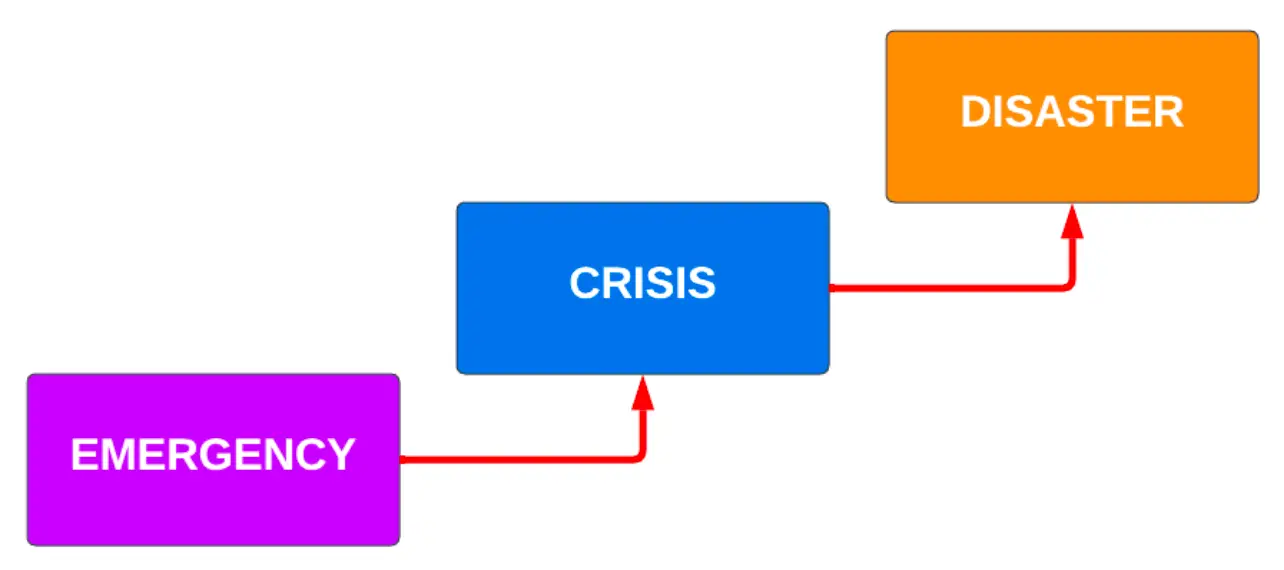
Figure 1: Escalating Events
Emergencies are generally predictable and in many cases we have a legal obligation to prepare for them - think fire, first aid, etc. We have procedures with trained and competent staff on hand to deal with the fall out of an emergency. If we have no crisis management plan in place it will very likely be mishandled. This can escalate quickly into a disaster. Human, material, economic, or environmental losses may occur that exceeded the organisation's ability to respond and recover using its own resources.
Stages of a Crisis
Understanding the stages of a crisis can help us create plans to mitigate, respond, and recover. Figure 2, below, uses Fink’s Crisis Management Typology (Fink,1986) of Prodromal, Acute, Chronic, and Crisis Resolution Stages.
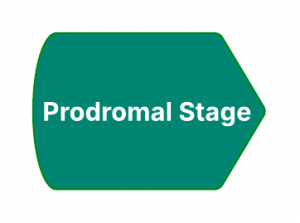
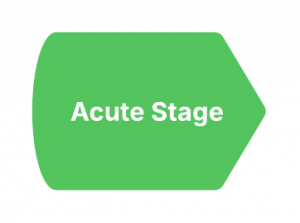
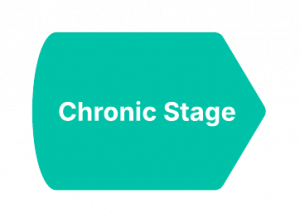
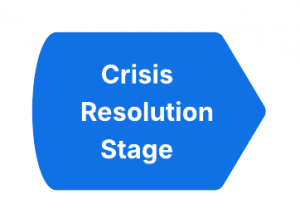
Figure 2: Fink’s Crisis Management Typology
Using this model, we will look at the anatomy of a crisis, and will compare this with a well known disaster: the events that occurred at Hillsborough 15 Apr 89. Though opinion is divided as to what the exact stages of a crisis are, Fink’s version works well when defining crisis management. Fink looks at a crisis as a medical problem for the organisation, and uses terminology that reflects this.
Prodromal Stage
A ‘prodrome’ is an early sign or symptom. Therefore, the Prodromal stage is that stage of the crisis when we are actively looking for or trying to identify the earliest warnings of potential emergencies and crises. We must be ever vigilant to this, and apply effective controls based on our assessment of risk. In effect, we are ALWAYS in a Prodromal stage of some description; any loss of control or poor assessment of risk here can rapidly trigger the next stage.
The earlier we can spot prodromes, the more time we have to react. Exactly what these signs and symptoms are will be depend entirely on the context of the organisation. Taking time out to developcontext using a business impact analysis (BIA) will help us identify warning signs and allow us to respond to them appropriately or even mitigate them entirely. Controlling events within the Prodromal stage is the best way we have of averting a crisis.
At Hillsborough in 1989, lessons that should have been learned from Burnden Park (1946), Upton Park (1967), Ibrox (1971), and Bradford (1985) were roundly ignored, leading to the disaster.
Acute Stage
As the name suggests, this is the most immediately painful stage. The situation will move rapidly and things will begoing glaringly wrong. It is very easy to be over faced by an assault of information coming in at a rapid pace; it will be difficult to understand fully, and can be contradictory. Action during the acute stage requires strong and competent leadership. This will necessitate situational assessment, decisive actions, good communication and coordination, sound delegation based on accurate monitoring of the situation, and the ability to effectively prioritise information, responses, actions, and tasks. To be effective here, planning must be rehearsed, practiced, refined, and amended. If not, an emergency will lead to a crisis. This is why a programme of review is so important in crisis and business continuity management. This is the tipping point. Actions implemented and opportunities missed in this phase will have far reaching consequences. This is the shortest phase, though it will feel like the longest when we are in it.
For context, during Hillsborough in 1989, this was likely from 3:05pm to around 3:30pm. 25 minutes.
Chronic Stage
This phase is aptly named as it is long-term and actions to recover, analyse, communicate, and prevent reoccurrence must happen. In most cases this will be an organisational wide operation and could be defined as a project or programme of projects. Lessons must be learned, and this may uncover painful truths. This requires careful management as messing this stage up can turn a recovered crisis into a disaster.
Regarding Hillsborough, this stage was so poorly managed at so many levels that UK law was still in this stage, 35 years later.
Crisis Resolution Stage
At this point, all lessons have been learned and actions to prevent reoccurrence have been successfully implemented. The aim of the Crisis Management Plan is to get from the first prodrome, to this point as rapidly and effectively as possible.

At BN SHE we are poised to develop your context and build your systems to mitigate crises, react appropriately to emergencies, and recover to the crisis resolution stage as efficiently as possible.
Give us a call, or drop us a line and let's see how we can help make your organisation resilient.